






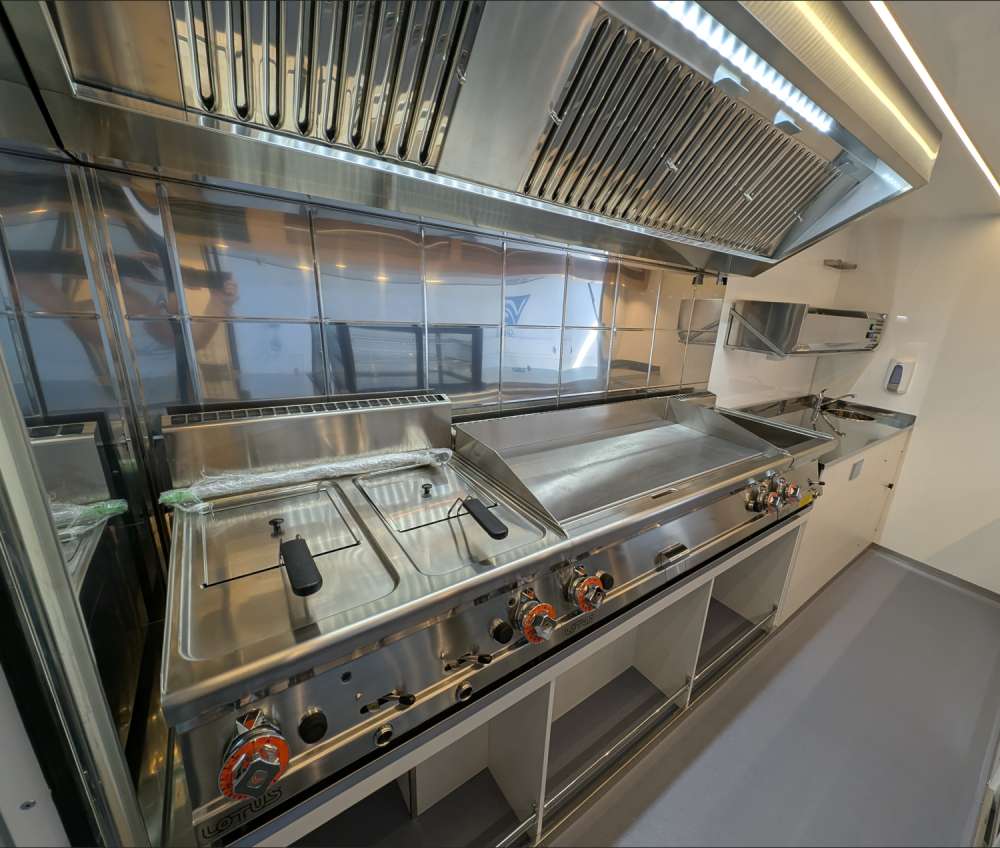
A food truck is a real kitchen on wheels. That’s why choosing the right cooking equipment is not a detail, it’s an investment that directly affects product quality, service speed and business safety.
When setting up, many wonder whether it’s truly necessary to invest in professional equipment or if “budget” solutions designed for domestic or semi-professional use are enough. The answer is clear: a food truck requires certified professional equipment.
1. Power and consistent performance
Low-cost appliances have obvious power limits: they work fine for small productions but struggle as soon as the chef needs to serve dozens of customers in a short time.
Professional EQUIPMENT guarantees:
- higher power output (more kW and shorter heating times),
- stable temperature even under full load,
- uniform cooking, ensuring the same quality from the first to the last dish of the day.
2. Strength and long-term durability
A food truck operates in harsher conditions than a traditional restaurant: vibrations, constant movement, temperature changes and limited space.
Professional EQUIPMENT is designed to:
- withstand transport and stress,
- ensure years of intensive use,
- be easily repaired or maintained thanks to standardized components.
On the other hand, cheap equipment risks breaking quickly, causing downtime and unexpected costs.
3. Safety and health regulations
On a food truck, there’s no room for compromise:
- professional equipment is CE-certified and compliant with European health standards and HACCP,
- it comes with integrated safety systems (thermostats, overheating protection, fireproof materials),
- it’s made of stainless steel with easy-to-clean surfaces, minimizing the risk of food contamination.
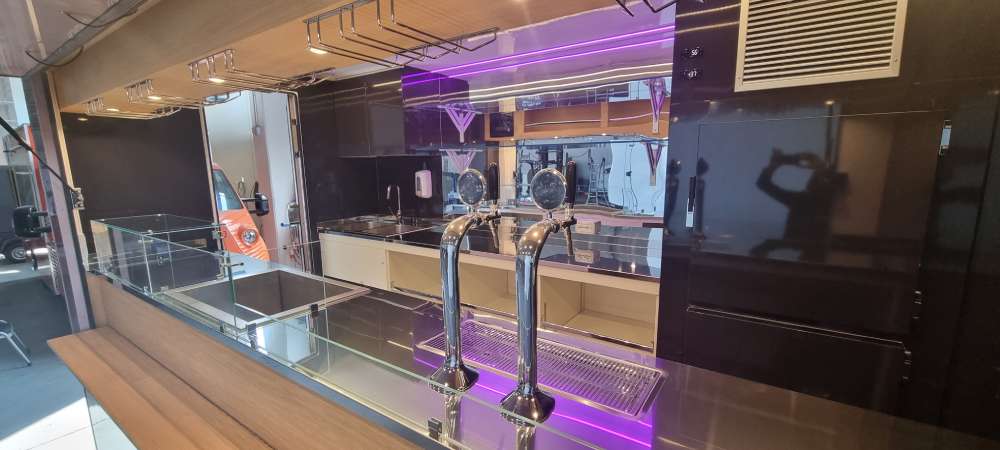
Budget equipment often lacks these guarantees, increasing the risk of penalties or even shutdowns during inspections.
4. Professional installation and setup
A key but often overlooked aspect is that high-quality equipment isn’t simply placed or plugged in: it’s installed and tested directly by the company outfitting the food truck.
This ensures that:
- the interior space is set up at the correct height and with the most efficient layout for production flow,
- equipment is securely fixed to prevent movement or damage while driving,
- each unit is tested to ensure proper functionality before delivery.
As a result, the chef gets an ergonomic, safe and ready-to-use workspace.
5. Energy efficiency and cost management
Even though professional equipment delivers more power, it’s designed to be more efficient: it heats faster, wastes less heat and optimizes working time.
Over time, this translates into cost savings and greater sustainability for the food truck.
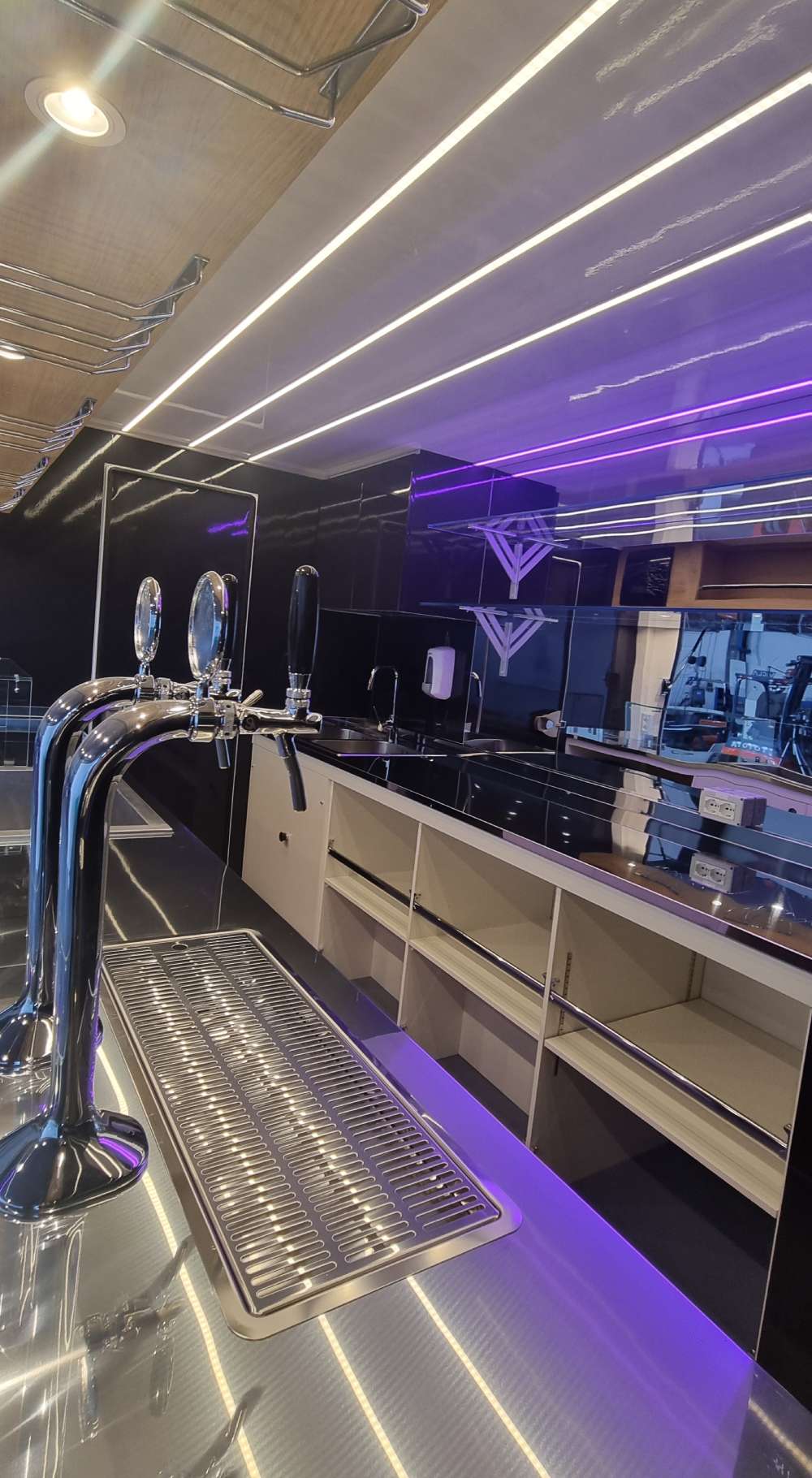
6. Image and reliability toward customers
A food truck equipped with top-level gear conveys professionalism and reliability.
Customers perceive quality through the care taken in the kitchen.
The chef works better and safer, ensuring fast and consistent service.
During events or large crowds, the food truck can handle volume without performance drops.
In summary, choosing professional cooking equipment is not just about quality, it’s a strategic investment.
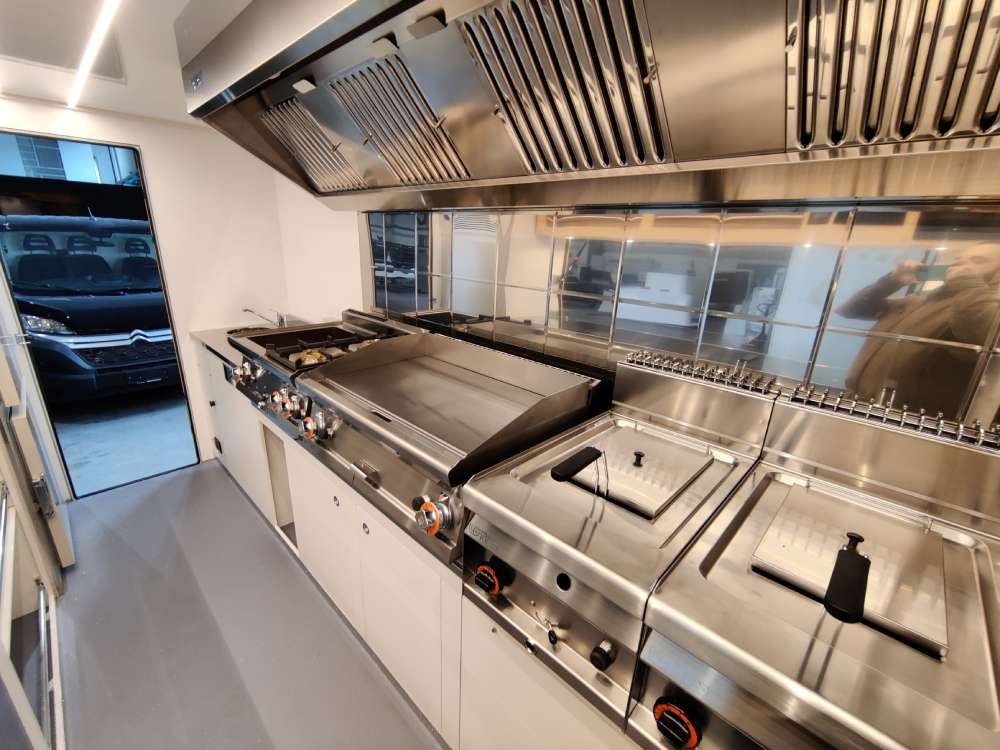
It means having a FOOD TRUCK that is:
- always capable of top-level production,
- safe and compliant with regulations,
- durable and reliable over the years,
- equipped with ergonomic and secure professional installations,
- ready to handle both daily street food service and major events.
A perfectly equipped food truck is a business that works, grows, and builds customer loyalty.
What to consider before choosing cooking equipment
The key aspects to evaluate when outfitting a food truck are:
- power (available kW and temperature consistency);
- CE certification and HACCP compliance;
- construction materials (stainless steel, easy-to-clean surfaces);
- strength and resistance to vibration and transport;
- professional installation (height, layout, securing, testing);
- ease of maintenance and availability of spare parts;
- warranty and after-sales service;
- energy efficiency and real consumption.


