



Why this guide (and how to use it)
We are VS Special Design, based in San Mauro Torinese: we design and build custom mobile shops and food trucks for brands and professional operators. This guide sums up what we see every day in the workshop and on the road: practical criteria to choose your first food truck—without costly mistakes.
VS method in 3 words: business model → menu → power. If you align them, the result is consistent quality, service speed, and healthy margins.
1) Business model and goal
Before the vehicle, define the playing field. What do you want to achieve in the first 12 months? Write it down, measure it, and we’ll design around that.
Continuous street trading
Lunch/evening in high-footfall areas. Requires autonomy, speed, reliability.
Catering and events
Weddings, fairs, festivals. Intense peaks, variable logistics/storage.
Brand activation
Promotional tours, temporaries, roadshows. Visual impact is central.
Corporate services
Mobile canteens for campuses and construction sites. Reliability and compliance.
VS question: are you prioritizing daily productivity or the brand’s visual presence?
2) Menu, techniques, and volumes: what drives the fit-out
The menu dictates space, systems, and power. We design starting from the peak.
Examples:
Frying/Burgers
High kW, high-performance hoods, stainless-steel surfaces.
Pizza/baking ovens
Proper insulation and flue ducting, adequate electrical/gas capacity, well-defined workstations.
Coffee/pastry
Water management, orderliness, professional refrigeration.
Mixed menu
Modular layout, energy flexibility.
Quick volume estimate: covers/hour × peak duration → we size hot lines (griddle/fryer/oven) and refrigeration/stocks.
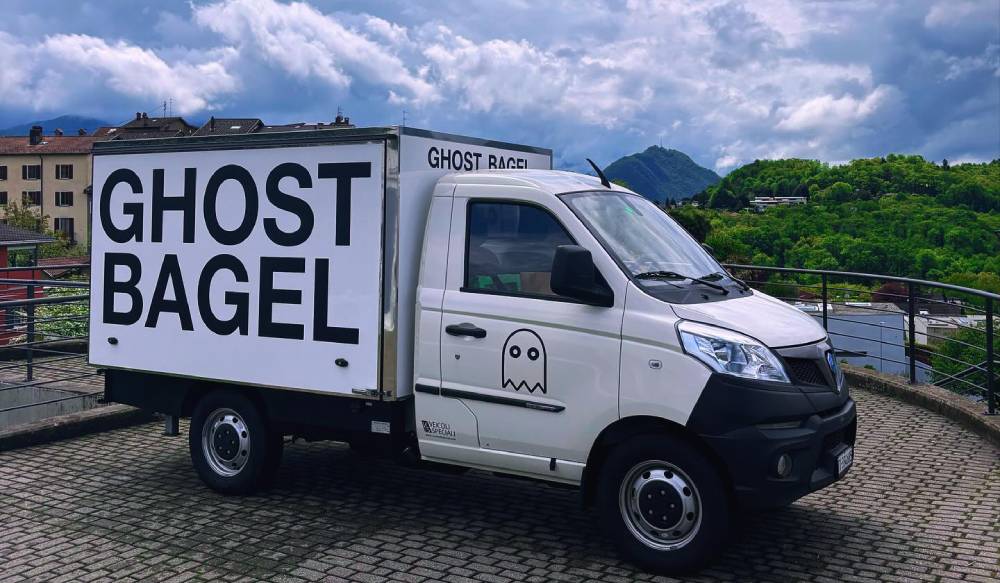
3) Which platform: van, trailer, mini-vehicles, containers
We design and fit out various platforms. Here’s how we position them at VS:
|
Platform |
Pros |
Cons |
Typical use case |
|
Mobile shop/food truck (e.g., NV, Pro, Pro X) |
Easy mobility; strong brand impact; functional, bespoke fit-out |
Higher initial cost |
Street food, high-output menus, brand tours, events, high-level catering |
|
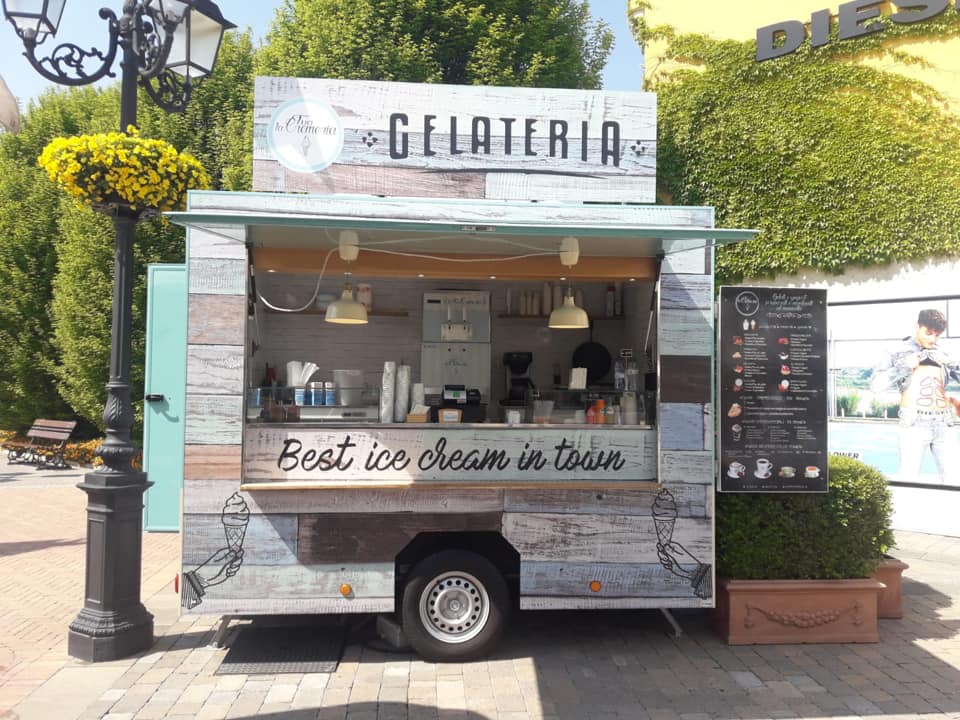
Trailer (e.g., Aircrome 4) |
Great value for money; modular; no engine |
Requires suitable tow vehicle and maneuvering space |
Catering/events, fixed stations, villages/resorts |
|
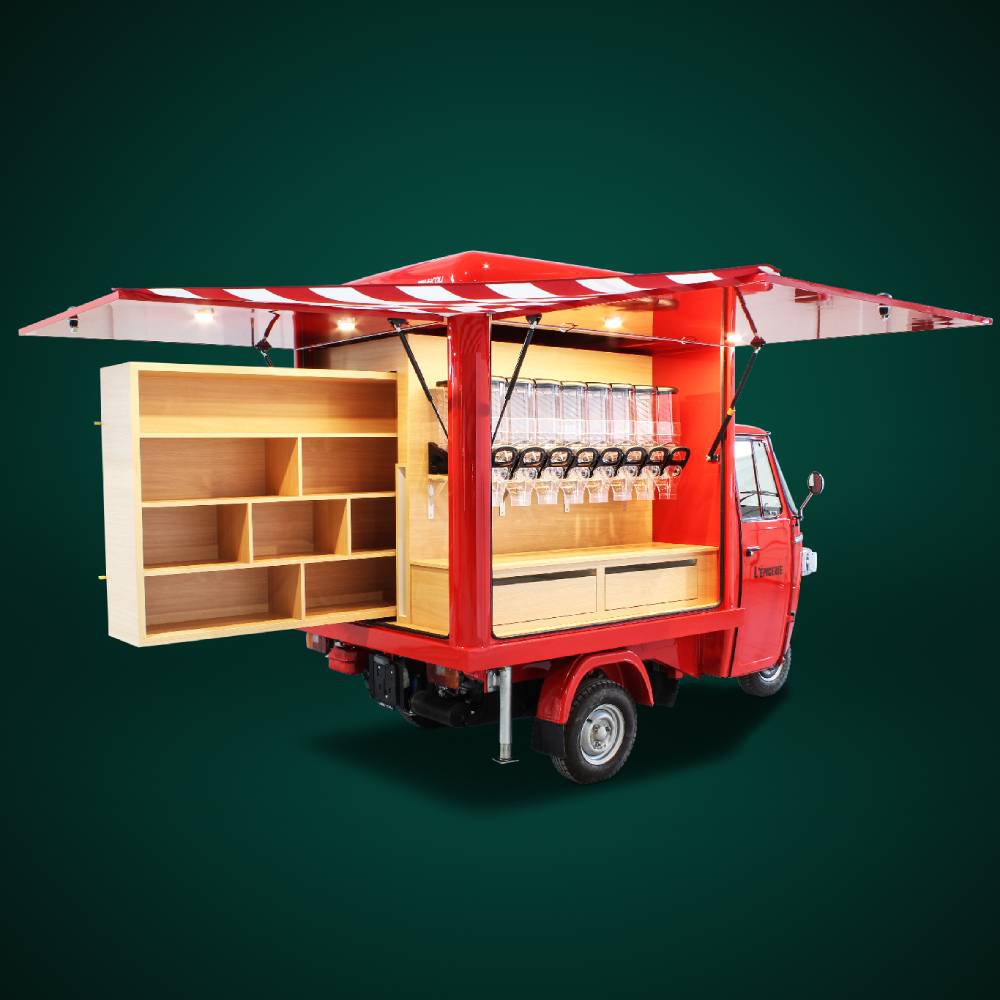
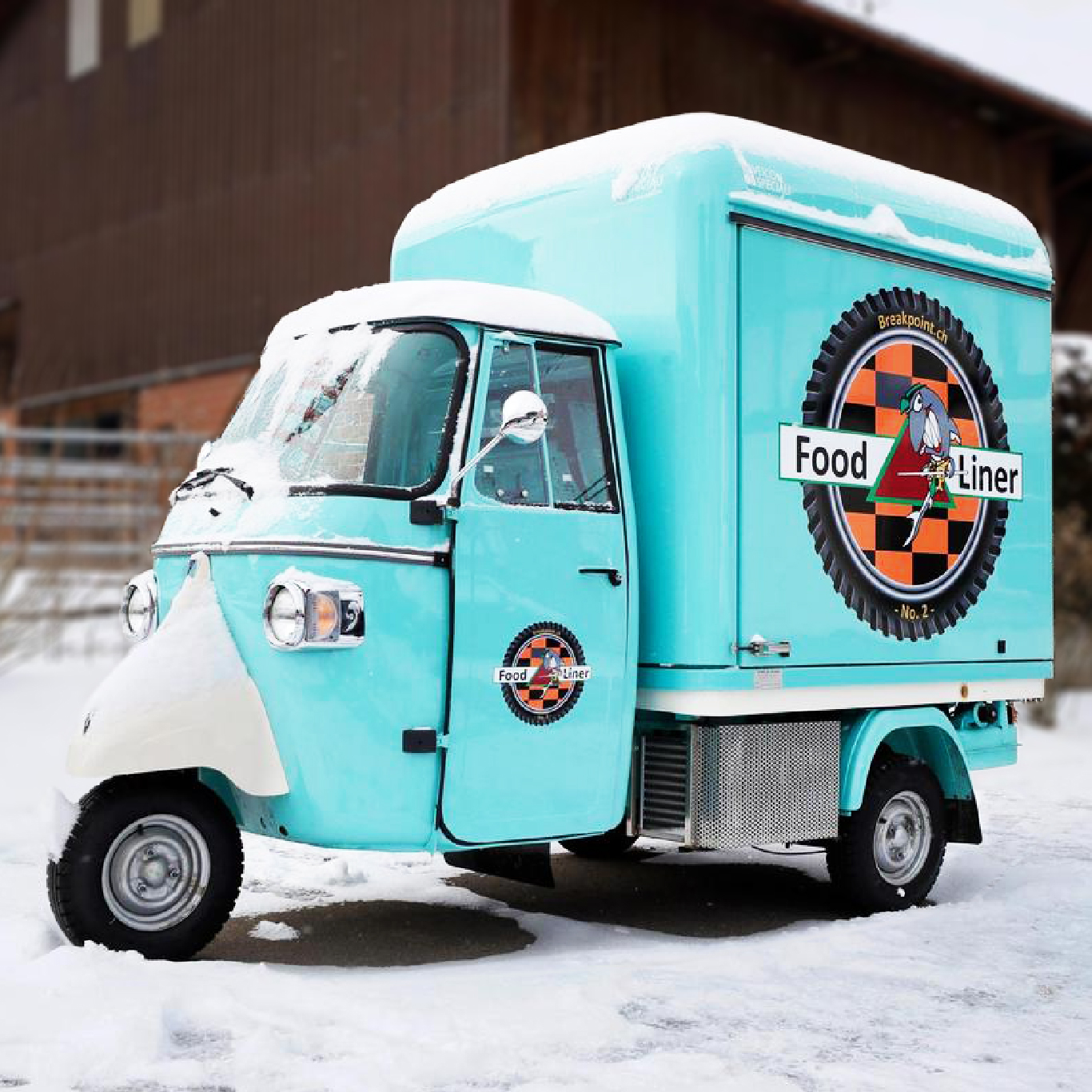
Mini-vehicles (Ape VCurve, Ape Smart, Porter FX/Craft X) |
Iconic; perfect for coffee/gelato/cocktails; huge wow effect |
Limited logistics capacity |
Brand activation, historic centers, coffee/gelato |
|
Economy versions |
Robustness and flexibility |
Lower visual impact, limited layout choices |
Corporate premises, general services, sports villages |
4) Power and energy: electric, gas, or hybrid?
Energy choice isn’t dogma, it’s engineering applied to your menu.
All-electric
Simple to certify and manage, ideal for indoor/historic centers. Requires available power (charging pillar ≥ 10–20 kW for high-performance kitchens).
Electric + gas
Greater flexibility. Requires gas supply management and annual inspections.
Generator/Battery system
Autonomy and backup for off-grid events.
VS golden rule: add up the kW used simultaneously and add a 20–30% margin. That’s your minimum power.
5) Ergonomics and workflow
Speed = takings. We design logical flows to avoid bottlenecks:
- Hot/cold line in sequence (prep → cooking → finishing → service)
- 70–80 cm corridor for 2 operators; counter heights appropriate to equipment
- Cleanliness and ergonomic spaces, e.g., dedicated outlets and wall passthroughs to avoid cables on work surfaces
6) Refrigeration, storage, and HACCP
Components you don’t see but that make the difference:
- Refrigerators/freezers with adequate volume and power, visible thermometers, proper ventilation
- Water: potable tank + waste tank sized to your shifts
- Washable surfaces and a dedicated hand-wash sink
- Pest proofing, sanitation plans, and periodic checks
- No overlaps or dead corners for maximum ease of cleaning
7) Hood, ventilation, safety
Comfort, odors, safety, and compliance depend on this.
- Hood sized to vapor/grease load with accessible filters
- Air changes to reduce heat and odors
- Emergency switches, suitable fire extinguishers, non-slip flooring
8) Weight, homologation, licenses, and access
Looking good isn’t enough: you need to be compliant, efficient, and durable.
- Mass and payload within limits (wear, insurance risks, failed inspections, fines)
- License and towing: check categories and MCAP
- LTZ/historic centers: city-friendly dimensions and propulsion
- System compliance (electrical/gas), up-to-date certifications
9) Budget, TCO, and purchase options
Make decisions by the numbers. Consider the Investment (vehicle + fit-out + branding) and operating costs (energy/fuel, maintenance, insurance, public land fees, staff, raw materials).
New vs. used:
- New, custom-built = reliability, scalability, workflow optimization, professional presentation
- Used = lower investment but constraints on menu and growth, no optimization, poor ergonomics, reduced reliability, no warranty
Financial options: purchase, leasing, rental
Residual value and resale: layout and equipment brands matter.
Mini ROI calculation (example)
Average ticket €10 × 120 covers/day = €1,200/day. Operating margin 25% → €300/day. Investment €85,000 → break-even ≈ 283 operating days.
Quick economic estimate template
- Average ticket (€)
- Covers/day (average)
- Revenue/day (€) [calc] =A1*A2 (enter in Excel)
- Operating margin (%)
- Total investment (€)
10) Lead times, service, and warranties
Always ask: realistic lead time (design, fit-out, testing), equipment type (professional or semi-professional, definitely not domestic), and service methods.
We provide video documentation and constant support at very short notice, and we also have loaner vehicles in case your food truck needs to be stopped for repairs. Deliveries are scheduled, and post-sales support is for life.
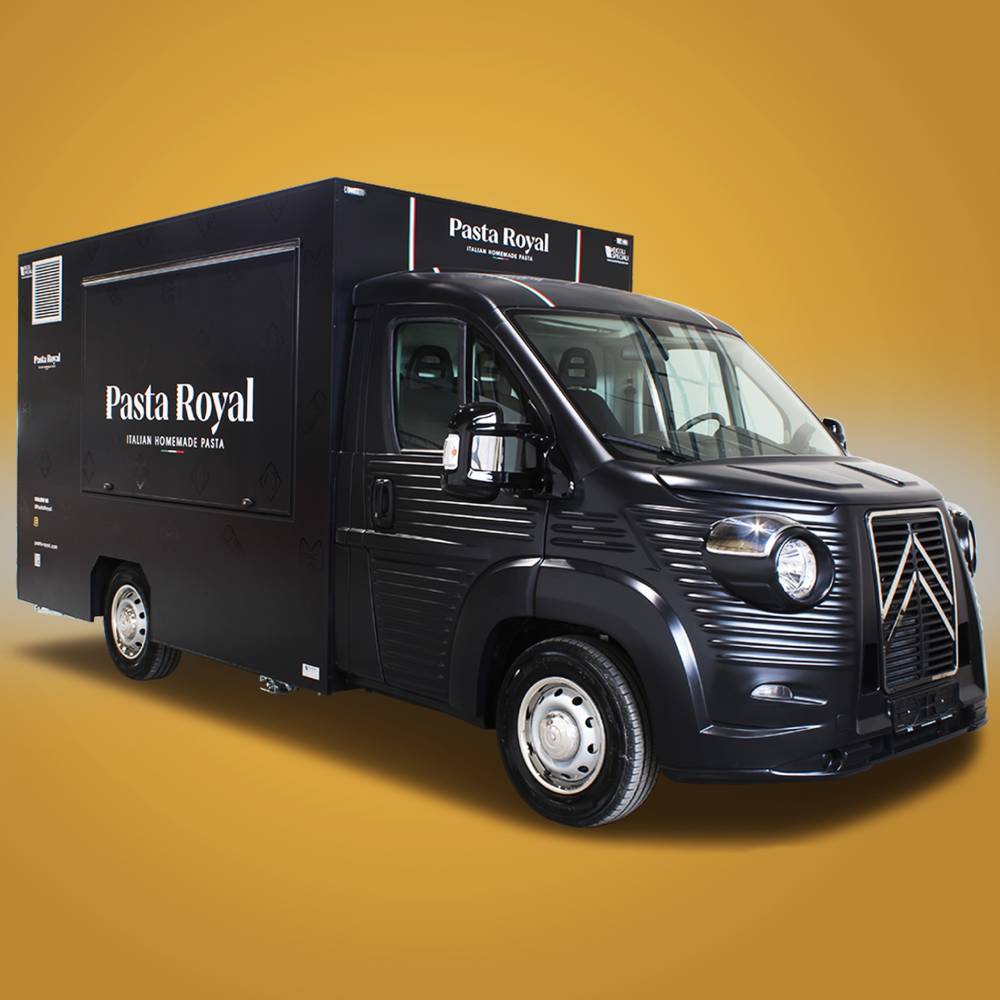
11) Brand and marketing: the scenic box
A food truck is a medium. We design illuminated signage, wrapping, and a service window that’s photo/video-ready.
- Legible menu boards, QR menus, pre-order and loyalty
- Uniforms, packaging, and POS consistent with the brand
12) “Ready to choose” checklist
Strategy: channels (street/catering/brand activation), seasonality, estimate of volumes/hour and average ticket
Technical: menu and equipment, available power with 20–30% margin, hood/air changes
Vehicle: coherent platform (van/trailer/mini/container), weight/payload, LTZ access, ergonomics and flows
Regulations & safety: certified systems, HACCP, extinguishers and PPE, manuals on board
Economics: TCO (Capex + Opex), financial formula, marketing plan and event calendar
Common mistakes to avoid when building a food truck
- Designing the vehicle before locking in menu and volumes
- Underestimating the kW required (bottlenecks)
- Ignoring weight/payload and urban access
- Fitting out without logical flows
- Skimping on critical equipment (downtime and lost margins)
Mini decision map
- Events/catering → Trailer or medium/large van
- Historic centers/brand icons (coffee/gelato) → Mini-vehicle
- Street trading with peaks (burgers/pizza/fried) → Powerful van or gas+electric hybrid
- Promotional tour → Show-stopping vehicle with heavy branding
FAQ
How much space do two people need to work? At least a 70–80 cm clear corridor and counter heights of 90–95 cm.
How much power do I need? Add up the kW used simultaneously and add 20–30%. High-output kitchens: 12–20 kW.
Better to start new or used? New and custom if the menu is ambitious or growth is planned; used for light testing.
How much does the hood matter? A lot: comfort, odors, safety, and compliance depend on a properly sized hood.
Examples of VS platforms (selection)
NV Food Truck — prestige and professionalism
Professional Food Truck — ergonomics and productivity
Pro X Food Truck — top-tier technology and performance for demanding menus
Eco Food Truck — efficiency and solidity
Ape V-Curve / Ape Smart — icons for coffee/gelato and brand activation
Porter FX / Porter Craft X — versatile for street and events
Rimorchio Aircrome — modular trailer for catering and events
Want a tailor-made proposal for your new food truck?
- We start from menu, volumes, and use scenarios.
- We prepare two options (van vs trailer) with layout, power, lead times, and ROI estimate.
- We can include renderings and a marketing launch plan.


