





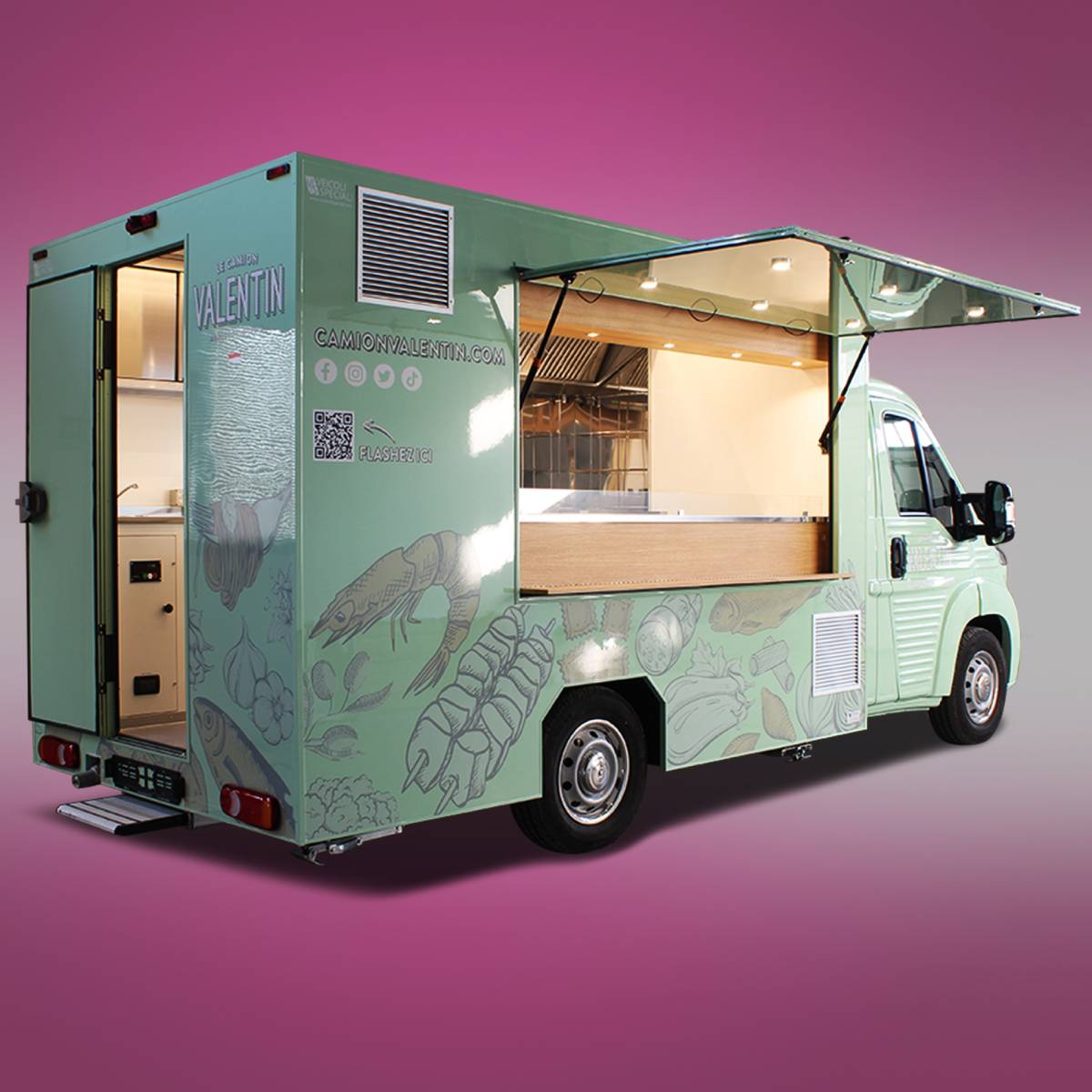
In recent years, the world of street food has changed faster than many operators could have imagined. A food truck is no longer “just” a well-equipped vehicle and a good product: today, those who work on the street compete with delivery apps, structured fast-food chains, hyper-organized dark kitchens, and increasingly digital customers.
The good news? A food truck, if well organized and up to date, can still win this challenge. But it’s time to adapt: technology, data, smart mobility and targeted events have become part of the job—just like the recipe of your sandwich or your gelato.
In this article, we analyze five fundamental levers:
- apps for ordering and payments
- a structured approach to requesting reviews
- real-time truck tracking
- how to operate effectively as an itinerant business
- creating events to test new products
1. Ordering apps: from “queue and wait” to “order and pick up”
The average customer is used to ordering everything from their smartphone: from groceries to train tickets. One of the historical limits of food trucks has always been the queue—customers stop, wait, and sometimes give up.
Integrating a digital ordering system allows you to:
- reduce physical queues (and the perception of waiting)
- optimize production (you can see incoming orders in advance)
- increase the average ticket (thanks to suggestions and structured menus)
- collect data: best-selling dishes, time slots, average spend
You can choose among several solutions:
- Dedicated ordering apps for your food truck;
- A QR code on the vehicle leading to a web app where customers can browse the updated menu, customize their dish, pay online and receive a “your order is ready” notification;
- Integration with electronic payment systems;
- Advanced POS systems offering digital menus, order management, automatic receipts and invoicing;
- Pre-orders for events and business lunches;
- For fairs, corporate events or office-area lunches, customers can pre-order by a set time, choose a pick-up window and receive confirmation via email or WhatsApp.
The goal is not to “go digital because it’s trendy,” but to make the experience easier—both for customers ordering and for the team working inside the food truck.
2. Asking for reviews: without feedback, you can’t grow
Today many people decide where to eat by looking at online reviews and photos. A food truck that moves around, if it doesn’t collect feedback, leaves a wealth of reputation behind.
You need a simple, repeatable strategy.
When to request a review
Right after serving the customer (“If you enjoyed it, could you leave us a review?”), using a small sign by the service window, or with an automated message after an app-based order.
How to make it easy
A QR code leading directly to Google Maps, your Facebook page or the preferred review platform; or a link via WhatsApp or SMS for regular customers or events.
Why it’s essential
It increases local visibility, builds social proof for festivals and events and provides real feedback about product, service, pricing and waiting times.
Learn to read reviews as a compass: understand what works, what doesn’t, what to improve and how to guide your menu.
3. Real-time tracking: “Where are you today?”
One of the most frequent questions a food truck hears is: “Where are you today?”
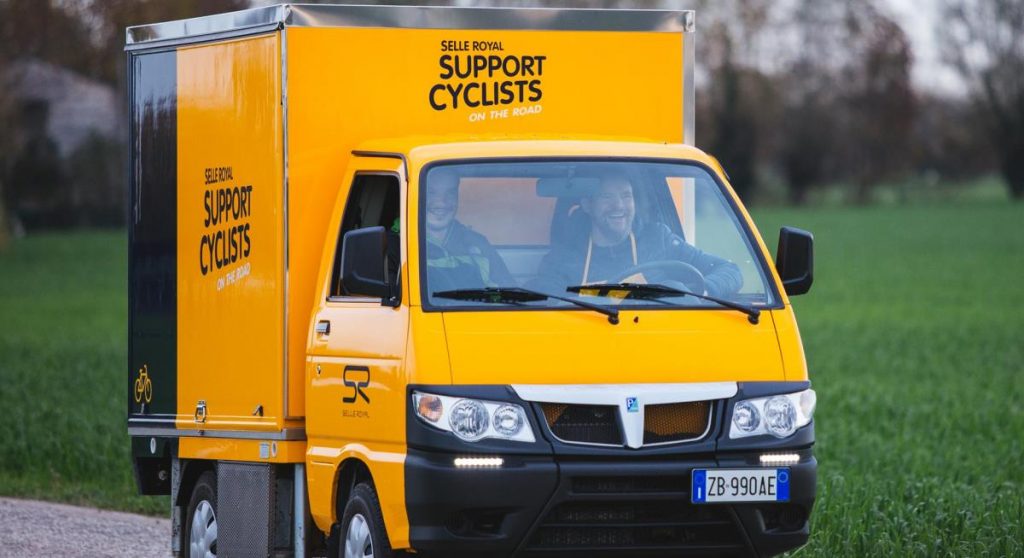
If every day you’re answering messages, calls and Instagram stories, it means you’re missing a basic system: a digital place where customers can see in real time where you are and where you will be.
Possible solutions:
- An updated map on your website;
- A “Where we are today” section with real-time location or at least time slots and addresses, plus a weekly or monthly schedule;
- Social channels used as a “digital noticeboard”;
- Instagram Stories pinned in highlights, weekly posts with your schedule and a link to your website or map for details;
- Geolocation via app;
- Some apps let customers “follow” the truck: they open the app and instantly see your location, hours and daily menu.
The advantage is two-fold: customers experience zero frustration because they always know where to find you; and you save time by not repeating the same answer endlessly. Plus, by integrating these data, you begin to understand which areas perform best, on which days, and with which products.
4. How to be itinerant—proactively
The heart of a food truck is mobility. But being “itinerant” does not mean moving randomly—it means planning a presence strategy.
Here are some practical ideas:
- Different time slots, different audiences;
- Lunch: offices, industrial zones, universities. Afternoon: schools, parks, pedestrian streets. Evening/night: central squares, nightlife areas, events, concerts;
- A rotation planned to avoid oversaturation;
- It’s better to return to an area 1–2 times a week, always on the same days and times: customers should know that you are always there on Tuesday at lunchtime;
- Local collaborations;
- Breweries, clubs, associations, gyms, coworking spaces: you bring the food, they bring the space and clientele. Everyone wins.
Being itinerant today means using data (sales, reviews, foot traffic) to decide where it’s worth returning—and where it isn’t. You don’t go “by instinct”: you measure results.

5. Creating events to test products: the truck as a laboratory
A huge advantage of buying a food truck compared to a fixed venue is the flexibility of your offering. You can use your truck as a real traveling laboratory to test new dishes, recipe variations, different price ranges and themed menus.
How to do it in a structured way:
- Themed events;
- Gourmet sandwich week, Mexican street food special, pulled pork weekend, vegetarian/vegan night. You promote the event on social media, via newsletter or WhatsApp, inviting customers to try and leave feedback;
- Quick surveys;
- Collaborations with brands or producers;
- Co-branding nights with craft breweries, dairies, cured-meat producers, sauce makers or dessert creators. You test new pairings; they reach a new audience.
This way, you don’t just sell—you experiment, measure, and then decide what to make permanent on the menu.
The food truck of the future is a hybrid of kitchen, apps, and data
Adapting today means accepting that a food truck is not just the vehicle, the product is not just the recipe, and the customer is not just the passer-by.
It is a combination of technology (apps, payments, maps, data), relationship (reviews, community, social media) and strategy (planned mobility, targeted events, product testing).
Those who will be able to integrate these elements will have a huge advantage over those who remain stuck in the old business model: “open the hatch and hope someone walks by.”


